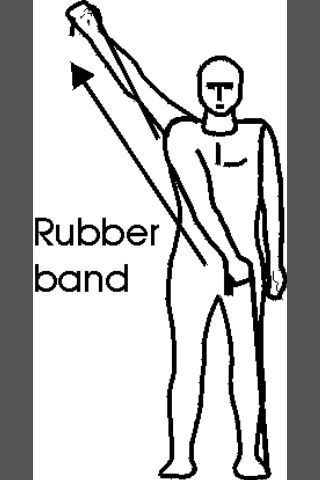
Exercise of the week: Sword Draw
The sword draw is a very versatile exercise. Is can be used for rehab, strength, ROM and posture.
Muscles used
Primary- deltoids (medial and lateral), infraspinatus, supraspinatus
Secondary- trapezius, rhomboids
Start- you can use a band, dumbbell or no weight for this movement. Stand with your knees slightly bent and the abdominals braced. The arm will start across your body next to the opposite hip.
Movement- while keeping the elbow locked, pull the arm up and across the body. Make sure to rotate the arm in the direction you are lifting so that your thumb is pointing behind you when you reach the top of the movement.
Weekly exercise journal
Diet: this week, my goal was to focus on the frequency of my diet. I had been feeling extra hungry for some time now and I believe it’s because I’m not eating frequently enough. Since my days can be very crazy and erratic, planning is key. So every day, before bed I looked at my schedule and created an eating plan that would fit. It’s a tedious process but it seems to have worked as I’m definitely not getting the bouts of hunger.
Exercise: this week I was focused on turning my sessions up a notch. I followed a compound set routine which is basically doing back to back exercises using the same body part. After strength training, I would follow that up with 1,000 jumps and 5 rounds of kickboxing with the bag. Much to my dismay, I even went for a one mile run.
Results: Weight- 175 (no change)
Journal: this was a frustrating week. I worked my butt off and had nothing to show for it. Obviously I understand why and intellectually, I get it but it doesn’t make me feel any better. It just goes to show that even with a professional, it’s very hard to handle not making progress especially when you have worked hard. I might be a little too focused on the weight loss but it’s my goal at the moment and I need to see some more pounds drop. The increased intensity felt good. I’m definitely not in the shape I was last year but I’m getting there. I did solid rounds with the bag and jumped rope. My goal next week is to lose a couple of pounds and get 5 solid workouts in. Until next week.
Ask the trainer, “Treadmil or Bike or Elliptical”
Question: I recently started going back to the gym and would like to know which machine provides the best workout, the treadmill, bike, elliptical or the Stepper?
Answer: This is actually a very common question which has both a simple and more complex answers. The simple answer is no, there isn’t a difference but that answer still comes with a * next to it. A lot is going to depend on a person’s goals as well as their physical condition and this is where the complexity comes into play. If the goal is simply burning calories, then there is no real difference. If you work out with your heart rate at 150 on a treadmill, you will burn the same amount of calories as if you did it on a bike or a stepper. It’s not the machine but the intensity level that matters and here is where it can get a bit complicated. A treadmill is great because you can’t really cheat. When a speed is set, you must keep up with it so you can get your heart rate up quickly and keep it there. On an elliptical or a bike, you can adjust the pace more easily than a treadmill so a person has to be really motivated and push themselves to reach the desired intensity level that they want. The stepper is somewhere in between as you can cheat a little bit but the stepper focuses so much on the legs that sometimes the legs will fatigue prior to reaching the desired time commitment.
A person’s physical condition also plays a role in deciding the right piece of equipment. Someone with knee or hip problems will probably be better suited using an elliptical as it provides an impact free workout when compared to a treadmill. A person with severe calf pain will likely not want to use the stepper as it will exacerbate the problem. If there are no physical injuries then take goals into account. If you are looking to build leg power then a stepper of treadmill will be best. If you are going to run a marathon then a treadmill is probably best and the same can go if you plan on a biking vacation. If there isn’t a set goal then it really comes down to personal preference. At the end of the day, fitness is a significant portion mental and if you don’t like a particular piece of equipment, you are going to be unlikely to keep it up. Just make sure that you are able to keep your heart rate up and you’ll be fine.
Treadmill: It’s high impact so it’s not good for those with joint pain or injuries. It’s the most functional of the machines because it mimics a real life movement. Hard to cheat with a treadmill so most people find it to be more intense than the others.
Bike: Low impact and the resistance can be adjusted. It can be easy to fall into a comfort zone so a person needs to push him or herself a little when using it. Safe on the joints. Lower body focused so fatigue in the legs is a possibility.
Elliptical: A great total body machine. Very low impact for people with joint problems. Very easy to fall into a comfort zone so like the bike, proper motivation is required to get a good workout.
Stair master: Very lower body focused to it’s possible to fatigue quickly. Can be very intense to it’s great for intervals but it’s hard to sustain an intense level for 30-45 minutes. Not good for people with lower leg tightness or hip problems.
Exercise of the week: Calf Circles
Calf circles
Muscles used
Tibialis anterior (primary)
Calves
Peronials
Exercise type
Posture/ corrective
Why are they good?
Calf circles are a very simple but effective exercise. Often times a person will feel pain in the front of their lower leg by the shins. This usually happens after beginning a running program or a longer/ faster than usual walk. People usually refer to this as “shin splints” but this is often not the case. The real culprit is an imbalance between the calves on the back of the leg and the tibialis anterior on the front. Most of us, especially those that play jumping sports and those that wear heals, have overly tight calves. This causes the tibialis anterior to grow underdeveloped. When the tibialis anterior is overworked, we will end up feeling pain and soreness. This exercise is a great way to develop the muscle.
The start
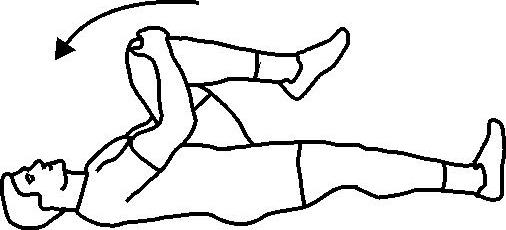
Begin by positioning yourself like the first picture. Lie on your back and pull one leg towards your chest
The movement (a)
Following the second picture, you are going to perform foot circles in one direction. Make sure to go through as full a range of motion as you can. Once you have completed 15-20, move on to the next step.
Movement (b)
Now you are going to perform foot circles in the opposite direction. Again, go through as complete a range as you can. After 15-20, move on to the final portion.
Movement (c)
The final movement will be to dorsi flex and plantar flex the foot. This means that you are going to flex your foot as much as you can and then extend the foot as far as you can by pointing the toes. Alternate between the two for 15-20 reps each and then switch legs.
Why you shouldn’t worry if you don’t lose more than 1-2 pounds a week.
The majority of my clients over the years have wanted some form of weight loss, some more than others. Early on in my career, it seemed to be an inevidability that a person would experience frustration at not losing weight fast enough. Whether the person wanted to lose 10 pounds or 40, there was this feeling of wanting to get from point a-z without travelling through the other steps in between. Generally, when someone is participating in a weight loss fitness program, it is not advisable to lose any more than 2 pounds a week. In fact, losing more than that number is usually less healthy and is less likely to succeed. It was a challenge for me early on to learn the proper ways of articulating this without discouraging the client but over time, I’ve formed a good way of both explaining this and coming up with a good alternative way of approaching weight loss.
We live in a society that is all about instant gratification and the fitness industry is no different. Weight loss suppliments, dvd’s and products are all sold as things that will create almost instant results. This creates an attitude when it comes to fitness which focuses on a lot of weight loss in a very short period of time. When someone approaches their fitness program with this mindset, 90% of the time, they will end up disappointed when they don’t see the pounds melting off. This frustration eventually leads to the person abandoning their fitness program.
People make a few major mistakes when beginning a fitness program geared towards weight loss. The first mistake is that they focus too much on the scale. The second mistake is that the person usually tries for too much too fast. It seems a bit counter to the goal to say that people pay too much attention to the scale but the fact of the matter is that it’s true. When you are in a weight loss program, it’s more important to know the kind of weight you are losing and not simply the amount of weight that you lose. I will illustrate this point in next weeks post but simply put, it’s more important that a person lose fat and inches than total pounds. The second mistake is also common and very dangerous. Often times, especially with beginners, a person will get gung ho over a diet and exercise routine. They will work out 5-6 days a week for an hour and a half, they will go on the new fad diet and usually this person will show a sharp drop in weight over the first few weeks of their fitness program followed by a plateau. Usually within 4-6 weeks, the person has stopped losing weight all together and they start feeling tired, sluggish and eventually get burned out. They stop the program and gain all of the weight back. This happens because the person is not physically and emotionally ready for that kind of program. It’s sustainable up to a point but eventually the budy simply can’t handle the dramatic change and it breaks down.
Aside from the physical and mental fatigue that comes from a sudden and dramatic change is the fact that the body will end up burning lean bodyweight instead of fat for it’s energy. Our bodies are only designed to lose 1-2 pounds of fat a week and usually anything more is going to be lean bodyweight. This means that while 10 pounds may look good on the scale, only 2 of those pounds would be from fat so it’s definitely not ideal.
The right way to approach weight loss is the same way one should approach fitness. Fitness/ weight loss is an ongoing process which requires consistency and regular assessments of progress. A person should be in a fitness program which they feel they can sustain forever. This means starting slowly and increasing the intensity of the diet and exercise over time rather than going to an extreme right off of the bat. It is also important to measure progress. This is not only done by the scale but also by measurements, pant size and even other people recognizing the change in your body. A good weight loss program should see a person make small but consistent progress over time. This is habit forming and much more likely to succeed in the long run. It’s much better to lose 1-2 pounds a week over the course of a year than it is to lose 30 pounds in a month and then to crash and gain it all back.
Next week I’m going to illustrate the difference between a consistent weight loss program and one of your typocal crash dieting programs. Be sure to check it out as it really shows the importance of consistency and steady progress over super fast weight loss.
Weekly Exercise Journal 2
Diet: My diet this year has been awful. I’ll eat anything and I’ve had a hard time specifically with peanut butter and jelly sandwiches as well as unhealthy snacks. Just as I preach to my clients, the focus of my diet is to make changes gradually rather than changing everything at once. In my case, since I’ve been doing this for so long, it will be at a bit of an accelerated pace. This past week, my focus has been eliminating the bad snacks. So no muffins, PB&J or anything like that.
Exercise
I always work out hard, so the intensity level has never been an issue. My problem is consistently getting to the gym. That had been a challenge with the combination of my work schedule and being tired. This weeks workout goal was simply to get into the gym 4-5 days even if it was for 30 minutes. My workouts were mostly Strength training so standard exercises and my rep range was 8-10. Starting next week, I will include a sample workout with my postings.
Results
Weight– 178 -6
Bodyfat- 9.4 -.6
Journal
I had a really good week. Its amazing how much better you feel just after a week of better habits. It doesn’t hurt that I lost weight rich off the bat. The diet change wasnt too hard. I’m an all or nothing kind of person so eliminating the junk all together wasn’t too bad. My substitution has been coffee with skim milk and splenda. I didn’t make any changes this week to my exercise routine but I did work out 5 days. That alone made me feel like a million bucks since I had been averaging 1-2 days for the last 4 months. So far so good but this being the first week, I know there is a long road ahead. Next week will be big as I make more changes and begin the thing I hate most,
Running. Thanks for reading.
Exercise of the Week- Triceps Kickbacks
Exercise Name- Triceps Kickbacks
Muscles used- Triceps (Primary Mover), Lats (stabilizer)
What it’s good for- Triceps kickbacks are a great exercise for developing the triceps. This exercise shouldn’t be done with heavy weights but light to moderate and try to concentrate on the movement and really working the muscle.
Start- With one knee on a bench place the same arm on the bench in front of you. Make sure your back is parallel to the bench and that the abs are tight. The arm with the dumbbell should start bent at 90 degrees with the upper part of the arm glued to the side.
Movement- Simply extend st the elbow and slowly control the arm back to the starting position. Make sure that the upper arm stays glued to the side throughout the movement and that you don’t move from the shoulder.
Strategies for Maintaining Healthy Eating Habits (Part 2)
Last week, I tried to give an explanation for why diets fail and the ways in which a person should approach their eating. This week I’m going to discuss what I believe are the core principles of a good diet. These are easy to follow principles and are things to work on if you are looking to put together a good eating plan.
Principle 1- Daily Caloric Intake (DCI) vs. Daily Caloric Expenditure
This principle is pretty straight forward. The DCE represents the amount of calories your body burns on an average day. Click here for a DCE calculator. The DCI represents the amount of calories you take in on a given day. Click here for a calorie counter. In order to lose weight, a person must be at a Caloric defecit meaning that the DCE must be greater than the DCI or you must burn more calories than you take in. If a person wants to gain weight, then the DCI must be greater than the DCE. There are 3,500 calories in one pount of fat so for a person to lose one pound a week, he or she must on average take in 500 fewer calories than he or she burns every day.
Principle 2- Breakfast
Breakfast is the most important meal of the day. It’s important because helps set up the structure for the rest of the day. Studies have shown that people who eat breakfast actully consume fewer calories per day than those who don’t. The reason why is because skipping breakfast causes a person to feel significantly hungrier when it comes time for the first meal of the day. This hunger usually causes the person to over eat and to make bad decisions. In addition, skipping breakfast usually causes a person to feel tired, sluggish and rely on coffee and simple carbs to gain energy. Eating breakfast, sets up the day properly and when it comes time for the second meal, the person won’t be as hungry. This will cause the person to eat less later in the day and will help regulate the system to get used to eating frequent but small meals.
When beginning a healthy diet, it’s more important that a persn get used to a consistent breakfast than that they make perfect choices. Breakfast doesn’t need to be a huge meal but should be a good mix of protein and carbs. This provides the person with energy that will be needed to begin the day. Good options are oatmeal, certain cereals like total, fruits, egg whites & whole wheat toast and yogurt.
Principle 3- Drink lots of water
Water intake, along with maybe breakfast, is the most neglected part of many diets. It is recomended that we drink 8 glasses of water a day and that number actually increases if you participate in a fitness training program. Water is great for many reasons. First of all, it keeps us hydrated. The higher the hydratio lever, the thinner the blood and easier it is for the heart to work. Second, it helps your body get rid of waist and toxins, like a cleaning system for the body. Third is that the more you drink water, the less likely you will be to drink sodas, juice and other beverages with high sugar contents. This is very important. Most soda and juice have no nutritional value and simply serve as empty calories, a great way to cut calories is simply to cut those out and replace them with soda. If you drink 3-4 cans of soda a day, you can immediately cut 400+ calories daily.
Principle 4- Eat Smaller more Frequent Meals
You have probably heard this one before and it is really important. Eating frequently can play a huge role in a weight loss program. First of all, every time the digestive system begins work, you burn calories. So, whenever we eat, we are also burning some calories in order to digest the food. What this means is that if person A eats 2000 calories over 3 meals and person B eats 2000 calories over 6 meals, person B will burn more calories throughout the day because the digestive system was active 6 times vs. only 3 by person A. Secondly, The more frequent the meals, the less hungry we will be from meal to meal. This means that we will eat less at each meal instead of overeating due to hunger. Finally, frequent meals will help to keep our energy levels up and consistent instead of a roller coaster like many go through.
Principle 5- Day to Day Consistency
Consistency is the most important part of maintaining healthy eating habits, especially if you are beginning a new plan. Eating habits can be a challenge to fix and unless it’s ingraned in us, it’s very easy to fall off the wagon. Try to maintain consistent times to eat each day. Eat breakfast at 7:00 each day for example, rather than at random times. Also try to not leave more than 4 hours between meals or snacks. This will cause you to consistently think about eating but you’ll never be too hungry. When beginning a healthy eating plan, make sure to come up with something that works, is comfortable for you and stick to it. If you have a bad day or two, don’t beat yourself up just get back to the good habits. If you are consistent, then after a few months, you’ll find that you are sticking to these principles without even having to think about it and then you can make more specific changes to your new eating plan.
Monday’s Client Fitness log- “Metamorphosis”
Check out this weeks post titled “Metamorphosis“