Weekly Exercise Journal 3

Diet: This weeks goal was to build back some structure to my diet. Due to my hectic schedule, I’m constantly eating on the go which is a waste of money and way too many calories. This week was about going back to basics for me. I made a trip to trader Joe’s and got a ton of food. I prepared ground turkey, chicken breasts as well as sliced steak. I also got tons of fruits and healthy snacks. I’m making sure to have something to eat every 3-4 hours and for me I’m munching on whatever is in my refridgerator. I’ve been able to keep to it this week.

Exercise:The focus this week was to include some cardio. I was happy with the frequency last week but strength training is not enough. My goal this week was simple, one 1.5 mile run.

Results:

Weight- 175 (-3)

Bodyfat- 9.4 (0)

Journal: I absolutely hate running, it’s the bane of my existence. It must be a combination of thngs for me. First of all, I have asthma so I get short of breath quickly but that’s not a real excuse as I have no problem playing basketball for hours or sparring for 5 rounds. Second is after about 5 minutes of running, my body starts to itch sometimes violently. I’ve read articles about this being a medical condition but sometimes I think that it’s my mind messing with me because of my hatred of running. Finally, running is just boring and I don’t have the attention span to keep it up for an extended period. Even with all of these reasons not to do it, I realize that if I want to lose the weight quickly, I’m going to have to suck it up and run. This week I set a modest goal of 1.5 miles. I decided to do it outside as it was a nice day so I took my ipod, put on a sweatshirt, shorts and went out. About .5 miles into the run, the itching began and I started to feel winded. I was very much inclined to quit right on the spot. A minute later the itching got more intense and I could sense that I was mentally starting to give up. I had reached to proverbial fork in the road, I was either going to quit and likely not run again or I was going to push through and get past this barrier. I decided to put on my favorite song (Rosetta Stoned by Tool) put my head down and made the decision to push through. I made the 1.5 miles and hated every minute of it but in the end I was very proud of that accomplishment. It was a big moment for me to finish that run and I’m more excited than ever about what the future holds for me.


Please feel free to comment. Thanks for reading.

Exercise of the week: Calf Circles

Calf circles

Muscles used
Tibialis anterior (primary)
Calves
Peronials

Exercise type
Posture/ correctiveflexd_leg-53

Why are they good?

Calf circles are a very simple but effective exercise. Often times a person will feel pain in the front of their lower leg by the shins. This usually happens after beginning a running program or a longer/ faster than usual walk. People usually refer to this as “shin splints” but this is often not the case. The real culprit is an imbalance between the calves on the back of the leg and the tibialis anterior on the front. Most of us, especially those that play jumping sports and those that wear heals, have overly tight calves. This causes the tibialis anterior to grow underdeveloped. When the tibialis anterior is overworked, we will end up feeling pain and soreness. This exercise is a great way to develop the muscle.

The start
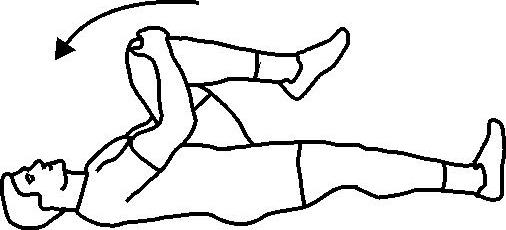
Begin by positioning yourself like the first picture. Lie on your back and pull one leg towards your chest

The movement (a)
Following the second picture, you are going to perform foot circles in one direction. Make sure to go through as full a range of motion as you can. Once you have completed 15-20, move on to the next step.

Movement (b)rm-03
Now you are going to perform foot circles in the opposite direction. Again, go through as complete a range as you can. After 15-20, move on to the final portion.

Movement (c)
The final movement will be to dorsi flex and plantar flex the foot. This means that you are going to flex your foot as much as you can and then extend the foot as far as you can by pointing the toes. Alternate between the two for 15-20 reps each and then switch legs.

Why you shouldn’t worry if you don’t lose more than 1-2 pounds a week.

     The majority of my clients over the years have wanted some form of weight loss, some more than others. Early on in my career, it seemed to be an inevidability that a person would experience frustration at not losing weight fast enough. Whether the person wanted to lose 10 pounds or 40, there was this feeling of wanting to get from point a-z without travelling through the other steps in between. Generally, when someone is participating in a weight loss fitness program, it is not advisable to lose any more than 2 pounds a week. In fact, losing more than that number is usually less healthy and is less likely to succeed. It was a challenge for me early on to learn the proper ways of articulating this without discouraging the client but over time, I’ve formed a good way of both explaining this and coming up with a good alternative way of approaching weight loss.
We live in a society that is all about instant gratification and the fitness industry is no different. Weight loss suppliments, dvd’s and products are all sold as things that will create almost instant results. This creates an attitude when it comes to fitness which focuses on a lot of weight loss in a very short period of time. When someone approaches their fitness program with this mindset, 90% of the time, they will end up disappointed when they don’t see the pounds melting off. This frustration eventually leads to the person abandoning their fitness program.
     People make a few major mistakes when beginning a fitness program geared towards weight loss. The first mistake is that they focus too much on the scale. The second mistake is that the person usually tries for too much too fast. It seems a bit counter to the goal to say that people pay too much attention to the scale but the fact of the matter is that it’s true. When you are in a weight loss program, it’s more important to know the kind of weight you are losing and not simply the amount of weight that you lose. I will illustrate this point in next weeks post but simply put, it’s more important that a person lose fat and inches than total pounds. The second mistake is also common and very dangerous. Often times, especially with beginners, a person will get gung ho over a diet and exercise routine. They will work out 5-6 days a week for an hour and a half, they will go on the new fad diet and usually this person will show a sharp drop in weight over the first few weeks of their fitness program followed by a plateau. Usually within 4-6 weeks, the person has stopped losing weight all together and they start feeling tired, sluggish and eventually get burned out. They stop the program and gain all of the weight back. This happens because the person is not physically and emotionally ready for that kind of program. It’s sustainable up to a point but eventually the budy simply can’t handle the dramatic change and it breaks down.
     Aside from the physical and mental fatigue that comes from a sudden and dramatic change is the fact that the body will end up burning lean bodyweight instead of fat for it’s energy. Our bodies are only designed to lose 1-2 pounds of fat a week and usually anything more is going to be lean bodyweight. This means that while 10 pounds may look good on the scale, only 2 of those pounds would be from fat so it’s definitely not ideal.
The right way to approach weight loss is the same way one should approach fitness. Fitness/ weight loss is an ongoing process which requires consistency and regular assessments of progress. A person should be in a fitness program which they feel they can sustain forever. This means starting slowly and increasing the intensity of the diet and exercise over time rather than going to an extreme right off of the bat. It is also important to measure progress. This is not only done by the scale but also by measurements, pant size and even other people recognizing the change in your body. A good weight loss program should see a person make small but consistent progress over time. This is habit forming and much more likely to succeed in the long run. It’s much better to lose 1-2 pounds a week over the course of a year than it is to lose 30 pounds in a month and then to crash and gain it all back.
     Next week I’m going to illustrate the difference between a consistent weight loss program and one of your typocal crash dieting programs. Be sure to check it out as it really shows the importance of consistency and steady progress over super fast weight loss.

Ask the Trainer- “When should I stretch?”

Question: I run regularly and whenever I run in the park, I see people stretching before they run. I’ve heard some people say to stretch before a run and some that say to stretch after. When is it best to stretch?

Answer: It is very common for people to go through a long stretching routine prior to running or any exercise for that matter. Generally it is not advisable to go through an intense static stretching routine before running. Static stretching would be the type in which you move into a position and hold that for a period of time. What happens is that in the short term, the stretch will reduce the contractile efficiency or the power that you can develop in the legs. This can cause a decrease in performance and sometimes lead to injury. The only time it is advisable to perform this kind of stretching before a workout or run would be if you have a muscle that is excessively tight and you would want to stretch only that muscle.

Before a workout or run, you definitely want to warm up the muscles. There are a few methods of doing so, a fast walk, light jog, various jumping exercises, dynamic stretches are all ways to warm up. Generally it’s bets to warm up for 8-10 minutes prior to exercise.

Flexibility is still very important as it reduces the risk or injury and fixes muscle imbalances. I definitely advise stretching but save it for the end of the workout.

Exercise of the Week (Single Leg Squat)

leg_dum-173The single leg squat is a great exercise which is effective in many ways. It’s a great exercise for the glutes as well as the quadriceps and there is a huge balance element which is great for your core as well as coordination.

The Setup

Start by Standing with the feet together. This can be done with or without weights but either way, keep your hands at your sides. Lift one leg off of the ground and kick tha leg back at the hip.

The Movement

Brace your abs and slowly sit back into a squat. Make sure to lean forward at the hip and keep your foot flat on the floor. Once you reach a comfortable depth, drive up through your heels and press back up. Try not to let the raised leg touch the ground until you finish your desired number of repetitions.

This is a great exercise and if you have trouble balancing throughout, don’t be discouraged, it takes time to build the balance.

Strategies for maintaining healthy eating habits (Part 1 of 2)

As mentioned in a previous post, the majority of diets fail. Diets fail for a wide variety of reasons but there are a few basic reasons why most diets are destined to fail right off the bat. The key to maintaining healthy eating is to change the approach one has to their “diet.”

Why do diets fail?
Of the many reasons why diets fail, I think the biggest comes from our perception of the word “diet.” When people think of that word, they associate it with something temporary, something restrictive, painful and a means to an end (losing weight). These are all negative associations and automatically make the diet likely to fail.
Another reason why diets fail is because they are generally not sustainable. Most diets are so restrictive that a person can only stick to It for a finite period of time. A person may notice significant weight loss from a new diet but once they go off of it, the weight is likely to come back on in equal or greater numbers. The final reason why diets fail is because they are often not specific to the person. Everybody has different habits, lifestyles and physical needs. A diet must take all of these individual needs into account in order to be successful.

How do I approach an effective diet?

In order to have successful diet, one must overcome the obstacles mentioned above. The first thing that we need to do is to change our mindset when it comes to the word “diet.” The word “diet” simply refers to the way we are currently eating. Whether your diet is healthy or unhealthy, the word still applies so there is no need to apply those negative connotations. For a diet to be successful, what is needed is the proper mindset. It needs to be approached as a lifestyle change and not simply a way to lose weight. While weight loss may be a goal, it is also important to maintain a healthy lifestyle and to keep the weight off long term.

A typical crash diet is designed to be used for a finite period of time and generally to lose a significant amount of weight over a short period of time. While these diets can yield good results initially, the person will almost always gain the weight back once they stop the diet. For this reason, a good diet must be sustainable. It needs to be something that the person can stick to for an indefinite period of time. If someone can sustain a healthy diet, they will lose weigh at a steady and consistent pace but more importantly, they will keep the weight off.
The reason why I use the word “strategies” in the title is because it is essential that a person have a strategic approach to their diet. Everybody is different and requires a different approach to structuring their diet. Specificity is very important and we need to take a variety of factors into account. Things like work schedule, availability of food, sleeping habits, religion etc. all may have a potential impact and should be takes into account. If a person can pit together a diet which takes into account their lifestyle, they are more likely to stick with it than if they are simply given a sheet of paper with what they should do.

Please check back next Tuesday for part 2 of this series as I will go into the 4 basic rules and you can start to build the frame of a good diet.

My Fitness Journal

We all go through it, even the mighty trainer. It’s that moment when you realize that you’ve let things get out of hand. For me, that moment occurred this weekend while trying to put on kachi pants that a year ago were almost too big for me. This time, I could barely get the thing on and it did not look good. Now I’m not delusional, I’m by no means in bad shape but ones body image is a very subjective thing and I have set a standard for myself which needs to be met.
It all started when I got back from my vacation in August. I gave myself two weeks of eating whatever I wanted. Somehow those two weeks turned into five months and suddenly I’m 20 pounds heavier, not consistently working out and barely fitting into my already close fitting clothes.
I’ve had a hard time getting motivated to get back into peak form. It’s very strange for me, being someone who normally coaches people to be the one needing the coaching.
I chose to chronicle my own exercise program to both serve as a form of motivation for myself and to show readers that everyone goes through this process. The psychology behind it, the ups and downs, this will serve as a insight for anyone that is interested.

I’m going to keep track over 3 months. I’m starting with my weight at 183 lbs, bodyfat of 10% and my waist is 34″. My goal at the en of 3 months is to be at 163, 4.5% bodyfat and 31″ waist. Each week, I’ll give details on my workout and how I’m doing with my program. Check back every Thirsday for a new Journal.

Blog at WordPress.com.

Up ↑